
How To Get Hired In 2026 Without Submitting A Single Application
And why the smartest career move has nothing to do with your CV.

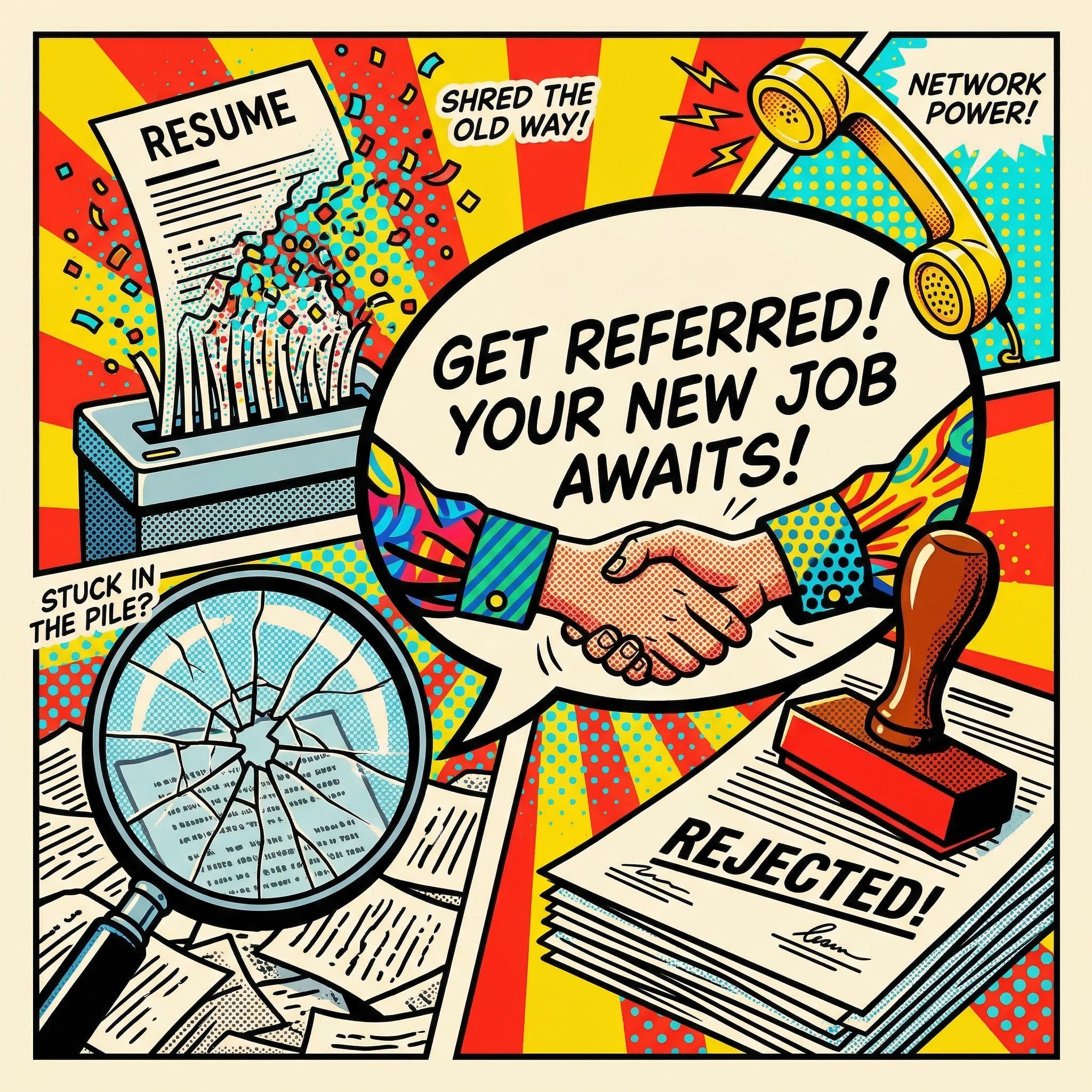
A hiring manager posted on Reddit last week.
He’d opened a new role. Within days, 400 applications landed. Every single resume had been run through an LLM — optimised for the job description.
Every candidate sounded like a perfect fit.
He couldn’t trust any of them.
He then used AI to screen the pile. It pulled the most gamified resumes to the top. The system designed to find the best candidates rewarded the ones who’d gamed it hardest.
His one piece of advice, buried at the end:
“Personal referrals are at a premium”
Job hunting like it’s 1999
When I left university in 2001 with a degree in Graphic Design, LinkedIn didn’t exist, the internet was just getting started and it was hard enough to get your foot in the door.
Sounds like the same today right!??
My options we’re:
Work for free and (hope to) get offered a junior position
Use a recruitment consultant
Look through job ads in papers (yep they used to be a thing)
Approach a business directly — write to them. Turn up at their door. Pull some clever stunt to get their attention.
Hope you had a “connected” family member
The actual route to my first agency was to get some experience in another industry (sales & account management) via a recruitment consultant and I then found a job ad for a small shop in London, selling websites.
Nothing to do with Graphic Design I here you say!
Fast forward and most of these options are still there, but the internet is saturated, applicant management systems (the recruitment backend) are like corporate guard dogs with AI screening people — it’s harder and more difficult than ever.
Not to mention the economic climate we live in right now.
AI has closed the gap between how strong and weak candidates look on paper
If every CV mirrors the job description perfectly, a hiring manager has no signal left. Everyone sounds qualified. No one stands out.
Of course, a CV is a must and you need one to get through the system. But the system no longer picks winners.
This is where people have been doubling down. Tweaking the formatting. Adding more keywords. Sticking it through another run of their favourite LLM. Playing a game where the rules reward the most artificial version of themselves.
The hiring manager on Reddit said it plainly. He skips the over-optimised ones entirely. The people getting through are the ones he already knows — or the ones someone he trusts has referred to them.
The smartest career move in 2026 isn’t a better resume. It’s making the resume optional.
You Already Have a Referral Network. You’re Just Not Using It.
If you work in an agency, you’re sitting on something most industries don’t have: a super-charged referral network. You see, we’re a pretty sociable bunch.
Agency people move. A lot. The strategist you worked with two years ago is now at a different shop. The creative director from that pitch is client-side. The developer who left last year just joined a startup.
Your ex-colleagues are scattered across 10 or 15 different companies. That’s your hiring network right there.
I’ve been in agencies long enough to see this play out a lot, to my own advantage.
A role opens, and the hiring manager’s first instinct isn’t to post it on LinkedIn. It’s to ask the team: “Do we know anyone good?”
Most of us understand this intuitively. But we treat it passively. We assume people will think of us when the time comes. We don’t invest in being thought of.
Your network already exists. The question is whether anyone in it would vouch for you right now — and whether they’d know what to vouch for.
Relationships are everything.
Being Referable vs. Being Connected
These are not the same thing.
Being connected means you have a large network. You accept every LinkedIn request. You’ve met a lot of people.
Being “referable” means someone would put their own reputation on the line to recommend you. That’s a different thing entirely.
Three qualities make someone referable:
1. You deliver reliably
You do what you say you’ll do. You hit deadlines. When things go sideways, you flag it early. You’re the person people go to when things are getting spicy.
People remember the person who didn’t drop the ball when it mattered.
2. You’re easy to work with
You handle pressure without making everyone around you miserable. You communicate clearly. You don’t create drama.
People remember how you made the project feel, not just the deliverables.
3. You’re memorable for something specific
Not “good at everything.” Good at *something*. The person who’s brilliant at client workshops. The one who makes complex data make sense. The one who keeps the project moving when everyone else is stuck.
When someone says “we need someone who can...” your name comes up.
A thousand LinkedIn connections won’t get you referred. These three things will.
How To Stay Top of Mind (Without Being Annoying)
Being referable only works if someone thinks of you at the right moment. That means staying in touch.
Stay in loose contact
You don’t need monthly catch-ups. An occasional message. A genuine congratulations when something goes well for them. Enough to stay on the radar — not so much it feels transactional.
Show what you’re working on
When people see your work, they remember what you’re good at. Share a case study. Talk about a problem you solved. This doesn’t require a “personal brand” just post some messages up on LinkedIn).
It requires being visible enough that people can connect your name to a skill.
Be specific about what you want
“I’m open to opportunities” is too vague to act on. “I’m looking for a senior strategist role in a healthcare agency” gives someone something to work with.
When you ask for an intro, make it easy
Name the person. Name the role. Give them a short blurb they can forward. And offer an out: “Totally fine if it’s not the right time.”
You’re not asking for a favour. You’re giving them a low-effort way to help.
Refer other people first
This is the fastest way to become someone who gets referred. When you see a role that suits someone in your network, send it to them. Generosity in a small industry compounds quickly.
One more thing. Don’t go from zero contact to “can you refer me?” That’s like putting another hole in your already leaky bucket.
Start now, not when you need it.
The Long Game
The CV arms race will keep escalating.
AI will keep making applications shinier.
Hiring managers will keep trusting them less.
The 400-applicant pile will grow to 800.
None of that matters if you’re not in the pile.
But the people who get hired in 2026 won’t have the best-optimised CV. They’ll be the ones a trusted colleague mentioned over coffee. The ones whose name came up in a Teams channel. The ones who didn’t need to apply because someone said: “I’ve worked with them. They’re good.”
And don’t forget your referral fee!
One thing to do this week:
Message 3 former colleagues you haven’t spoken to in a while. No agenda. No ask. Just reconnect and see how they’re doing.